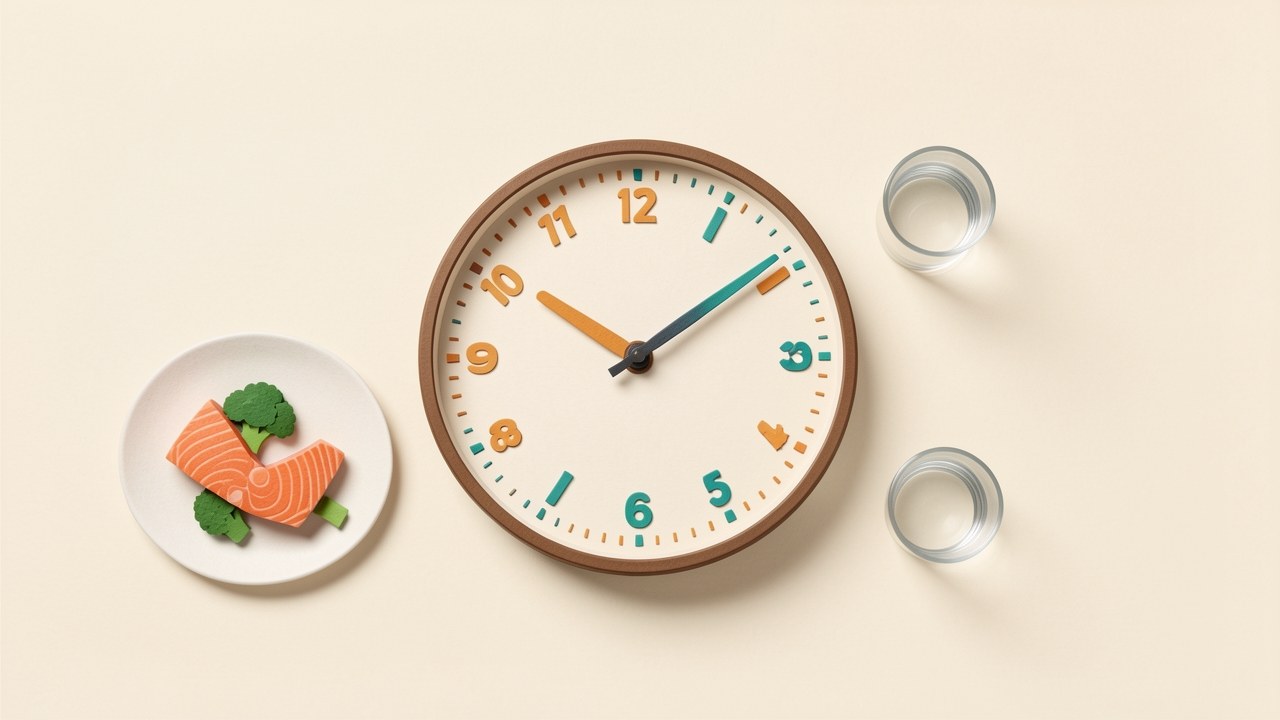
What is 16:8 fasting?
The 16:8 intermittent fasting plan involves consuming all foods and caloric beverages within an 8-hour eating window and fasting for the remaining 16 hours each day. It is a form of time-restricted eating, which is one of the most popular approaches to intermittent fasting.
Common 8-hour eating windows include 9 a.m. to 5 p.m., 10 a.m. to 6 p.m., and noon to 8 p.m. You choose the window that fits your lifestyle and then stick to it consistently. During the fasting period, water and calorie-free beverages such as black coffee and tea are permitted. This structure is simple to follow because you do not need to count calories or track specific foods—just time your eating.
Sources: Harvard T.H. Chan School of Public Health, Medical News Today, Gene Food
How 16:8 affects metabolism and hormones
The 16:8 fast shifts your body into a state that may promote weight loss and metabolic improvements. When you fast for 16 hours, your body depletes glycogen stores and begins to use fat for energy, a process supported by research on intermittent fasting.
Harvard researcher Courtney Peterson reports that daily intermittent fasting reduces key hunger hormones such as ghrelin and lowers blood pressure and oxidative stress. Eating earlier in the day (for example, an 8 a.m. to 4 p.m. window) appears to produce greater benefits for blood sugar and blood pressure than later eating windows, according to Peterson. However, this recommendation comes from the researcher's summary of her own studies, which may not yet be published or conclusive.
Intermittent fasting has also been shown to lower oxidative stress and improve some biomarkers of aging, according to the same researcher. These hormonal and cellular changes are part of why many people find the 16:8 pattern effective for weight management.
Scientific evidence for 16:8 on weight
A systematic review of 40 studies found that intermittent fasting was effective for weight loss, with a typical loss of 7-11 pounds over 10 weeks. This review includes various fasting protocols, not just 16:8, but the results are relevant because 16:8 is a common form.
Another systematic review of 27 trials found that intermittent fasting led to weight loss of 0.8% to 13% of baseline body weight, with no serious adverse events.
For those with type 2 diabetes, a randomized controlled trial involving patients with obesity found that a 16:8 fasting group lost 4.02% of baseline body weight, significantly more than a 14:10 group (3.15%) and a control group (0.55%). Both fasting groups also had significantly greater reductions in fasting glucose and HbA1c compared to control, with no significant difference between the two fasting schedules. These results are notable, but the trial was conducted in a specific patient population, so they may not apply directly to healthy adults.
In a one-year randomized trial of patients with obesity, time-restricted eating (8 a.m.–4 p.m., a 16:8 variant) led to an average weight loss of 18 pounds, while the control group lost 14 pounds; however, the difference was not statistically significant. When compared with continuous calorie restriction in 12 clinical trials reviewed by Harvard, intermittent fasting did not show a significant difference in weight loss or body composition changes. This suggests that 16:8 may be a viable alternative to traditional calorie counting for many people, but it is not inherently more effective.
Sources: Harvard T.H. Chan School of Public Health, Canadian Family Physician / PMC, Frontiers in Nutrition / PMC
How to start 16:8: step-by-step schedule
To begin 16:8, choose an 8-hour eating window that aligns with your daily routine. Many people start with a noon to 8 p.m. window, as it allows a normal lunch and dinner and avoids morning hunger. You can adjust the start time gradually, such as moving breakfast later by an hour each day until you reach your target.
Here is a sample daily schedule for a noon to 8 p.m. eating window. Adjust the hours to match your chosen window, and make sure to drink water throughout the day to stay hydrated.
- 12:00 PM: Break your fast with a balanced meal that includes protein, fiber-rich vegetables, and healthy fats.
- 3:00 PM: Snack if you're hungry—consider Greek yogurt, nuts, or fruit.
- 6:00 PM: Eat a full dinner, again focusing on protein and vegetables.
- 8:00 PM: Eating window closes. From this point, consume only water or calorie-free beverages like black coffee or tea until the next day at noon.
- Throughout the fasting period: Drink plenty of water. If you feel hungry, distract yourself or sip sparkling water.
- Build consistency: Stick to the same window each day. After a week or two, your body will adjust to the rhythm.
Sources: Medical News Today
Sample meals and snacks for eating windows
The 16:8 plan doesn't dictate what you eat, but the quality of your meals affects how you feel and your results. Aim for a balanced plate with lean protein, vegetables, whole grains, and healthy fats to keep you full and provide essential nutrients. Here are general meal ideas to help you structure your eating window. These are suggestions, not complete recipes with quantities.
- Breakfast (if your window includes it): Greek yogurt parfait with berries and nuts, or scrambled eggs with spinach and whole-grain toast.
- Lunch: Grilled chicken salad with mixed greens, avocado, and olive oil dressing; or a quinoa and black bean bowl.
- Dinner: Baked salmon with roasted broccoli and sweet potato; or stir-fried tofu with vegetables and brown rice.
- Snacks: Apple slices with almond butter, a handful of nuts, cheese sticks, or a protein shake.
Sources: Medical News Today
Common side effects and how to manage them
As your body adjusts to fasting, you may experience a few temporary side effects. In a 2022 randomized trial, common adverse effects reported in both the 16:8 and 14:10 fasting groups included palpitations, dizziness, abdominal pain, and mood changes, with no significant difference between groups. Other potential issues are feeling unwell, headaches, lethargy, crankiness, constipation, excessive weight loss in older adults, and overeating during the eating window.
To manage these, start with a shorter fasting window and gradually increase to 16 hours. Stay hydrated, eat nutritious foods during your window, and get enough sleep. If side effects persist or are severe, stop fasting and consult a healthcare provider. Also, be mindful that some people may find it hard to stick to the schedule, as the systematic review noted high dropout rates in several studies.
Sources: Medical News Today, Frontiers in Nutrition / PMC, Canadian Family Physician / PMC
Who should avoid 16:8 or seek medical advice
Certain people should not attempt intermittent fasting, including 16:8, according to expert guidance from Johns Hopkins Medicine. These groups include:
People with type 1 diabetes who take insulin should avoid intermittent fasting because of the risk of hypoglycemia.
Children and teens under 18, women who are pregnant or breastfeeding, and people with a history of eating disorders should also avoid intermittent fasting.
If you have a medical condition, are taking medication, or are unsure if 16:8 is safe for you, talk to your doctor first. This is especially important for older adults, who may be at risk of excessive weight loss.
- People with type 1 diabetes
- Children and teens under 18
- Pregnant or breastfeeding women
- People with a history of eating disorders
Sources: Johns Hopkins Medicine, Medical News Today
Frequently asked questions
Can I drink coffee during the fasting window?
Yes, you can drink black coffee during the fasting window. Water and calorie-free beverages such as black coffee and tea are permitted. Adding milk, sugar, or cream would add calories and break your fast.
Sources: Johns Hopkins Medicine, Medical News TodayIs 16:8 more effective than other fasting methods?
There is no definitive answer because few studies directly compare 16:8 with other methods using identical outcome measures. A randomized trial in people with type 2 diabetes found that 16:8 led to greater weight loss than 14:10, but both improved blood sugar control. Overall, intermittent fasting in general appears to produce similar weight loss to traditional calorie restriction, as seen in systematic reviews. The best method is the one you can sustain.
Sources: Harvard T.H. Chan School of Public Health, Frontiers in Nutrition / PMC, Canadian Family Physician / PMCHow long until I see results with 16:8?
Results vary, but you may start to notice changes within a few weeks. In studies, participants typically lost 7-11 pounds over 10 weeks on intermittent fasting. Weight loss of 0.8% to 13% of baseline body weight has been observed in trials. Consistency matters; your body needs time to adjust to the eating window.
Sources: Harvard T.H. Chan School of Public Health, Canadian Family Physician / PMCWhat should I eat to avoid breaking my fast?
During the fasting window, you should consume zero calories. Stick to water, black coffee, tea, or other calorie-free beverages. Avoid anything with calories, including juices, smoothies, or milk in your coffee, as these would break your fast and potentially affect the metabolic benefits.
Sources: Johns Hopkins Medicine, Medical News TodaySources
- Diet Review: Intermittent Fasting for Weight Loss — Harvard T.H. Chan School of Public Health
- Intermittent fasting in the treatment of type 2 diabetes — Frontiers in Nutrition / PMC
- The health benefits of intermittent fasting — Harvard T.H. Chan School of Public Health
- Intermittent Fasting: What Is It, And How Does It Work? — Johns Hopkins Medicine
- Intermittent fasting and weight loss: Systematic review — Canadian Family Physician / PMC
- 16:8 intermittent fasting: Benefits and how to get started — Medical News Today
- Intermittent Fasting and the 16/8 Diet – an Ancient Secret Worth Rediscovering? — Gene Food