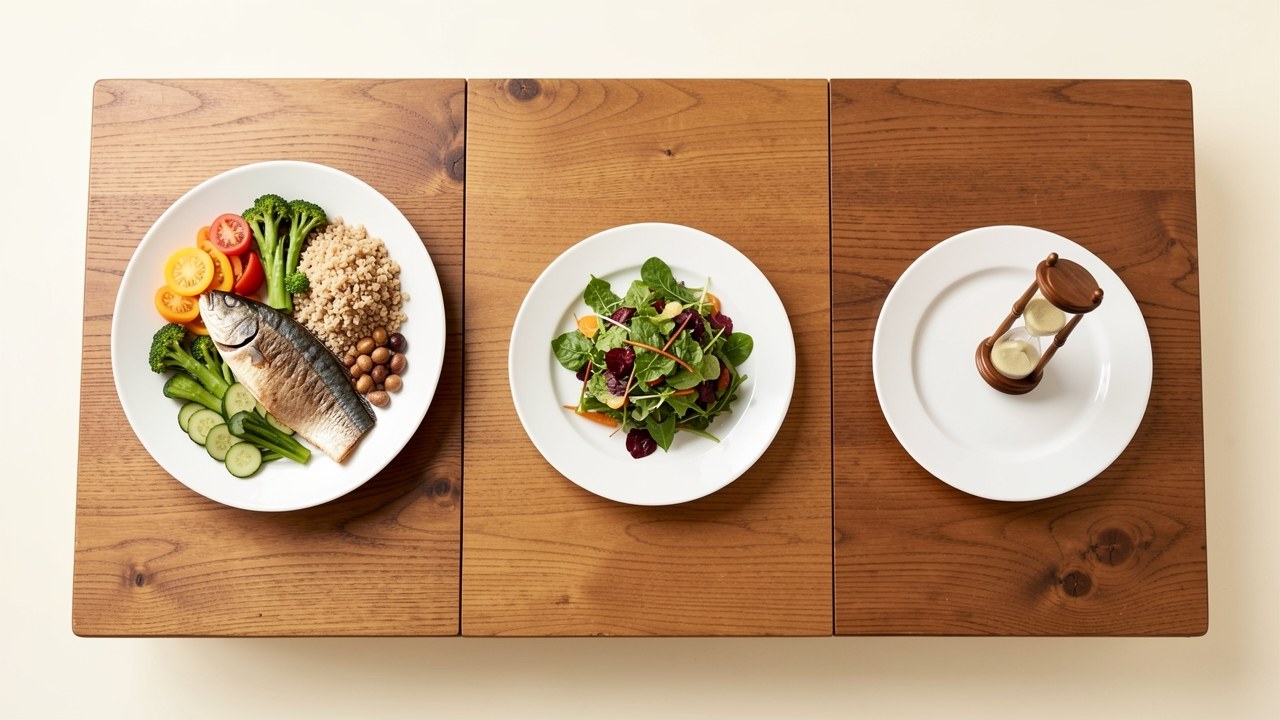
all methods
Intermittent fasting is not a single diet but an umbrella term for eating patterns that cycle between periods of fasting and eating. Rather than prescribing specific foods or calorie counts, it tells you when to eat. Most methods fit into three main forms: time-restricted eating, alternate-day fasting, and the 5:2 diet. Each approach creates a regular rhythm of energy intake that can help some people reduce overall calorie consumption.
Research suggests that intermittent fasting can lead to mild to moderate weight loss of 3% to 8% from baseline over short durations of 8 to 12 weeks. A 2022 meta-analysis of 43 randomized controlled trials found that intermittent fasting produced greater weight loss than no dietary intervention, and it achieved weight loss similar to traditional calorie restriction. In addition, a major Cochrane review of 22 randomized trials found nearly identical weight loss between intermittent fasting and conventional diets—the difference was only 0.33 percentage points of body weight.
Beyond weight, some studies have observed improvements in blood pressure and insulin resistance, but not every person will experience these effects. The key to success with any method is finding one that fits your daily routine and food preferences, because adherence over months matters more than the initial appeal of a protocol.
Sources: Simple and Practical Medical Education, LLC, Colorado State University, University of Illinois Chicago, Rutgers University, Frontiers in Nutrition
Time-Restricted Eating (16:8 and Other Windows)
Time-restricted eating limits food consumption to a defined window each day, with a fasting period covering the remaining hours. The 16:8 method—the best-known version—involves fasting for 16 hours and eating within an 8-hour window, such as from noon to 8 PM. Other ratios include 14:10 (fasting 14 hours, eating in 10) and 20:4 (fasting 20 hours, eating in 4). During the eating window, no specific calorie limit is set; the goal is to consume your normal intake within that period.
This method is often considered a good starting point for beginners due to its simplicity and sustainability. It can be as easy as skipping breakfast and having your first meal later in the day, or shifting dinner earlier depending on your schedule. Many people find the daily structure easy to remember and less disruptive than methods that require full-day fasts.
Because you are not told to restrict particular foods, the quality of your meals still matters. Eating mostly whole foods, vegetables, lean proteins, and healthy fats will help you meet your nutrient needs within the shorter window.
- Common windows include 16:8, 14:10, and 20:4.
- You may consume calorie-free drinks like water and black coffee during the fast.
- This is one of the most flexible patterns and can be adjusted to social schedules.
Sources: Simple and Practical Medical Education, LLC, Everyday Health, Cleveland Clinic
The 5:2 Diet
The 5:2 diet involves eating normally for five days of the week and restricting calories to 500–600 on two non-consecutive days. Those two 'fast' days are not zero-calorie days but rather very low-calorie days, allowing you some food to help manage hunger. On the other five days, you eat your usual meals without calorie counting.
This method offers a clear weekly structure: you only need to plan for two days of restriction. However, it requires careful planning on those days to keep your intake around 500–600 calories, which can be challenging if you have a busy workday or family obligations. Some people find that having lighter meals on fast days helps maintain energy, while others may experience irritability or trouble concentrating.
The 5:2 diet is moderate in difficulty compared with daily time-restricted eating or alternate-day fasting. Because you can eat normally most of the week, it may be attractive for those who prefer not to restrict daily.
- Two non-consecutive fasting days per week.
- On fasting days, women often target around 500 calories and men around 600, though amounts can vary.
- The remaining five days are not prescriptive—you may eat as you normally would.
Sources: Simple and Practical Medical Education, LLC, Everyday Health, Cleveland Clinic
Alternate-Day Fasting
Alternate-day fasting involves alternating between a normal eating day and a fasting day. On fasting days, you may consume about 25% of your usual energy needs—often around 500 calories—or, in the strict version, zero calories. On non-fasting days, you eat without restrictions. This cycle repeats continuously, so you might fast every other day for an entire week.
This approach is more demanding than the 16:8 or 5:2 methods because it requires you to manage very low-calorie days several times each week. Some research suggests that alternate-day fasting can be effective for reducing energy intake, which may lead to weight and fat loss. However, Cleveland Clinic notes that it is very restrictive and not recommended because it is difficult to sustain long-term and may increase the risk of nutrient deficiencies.
If you are considering alternate-day fasting, weigh the potential benefits against the day-to-day challenge. It may suit people who prefer a clear on-off rhythm, but the intensity can be prohibitive for many.
- Fasting days can be zero-calorie or modified to about 500 calories.
- You eat normally on every other day.
- This method is more extreme and may be hard to maintain over months.
Sources: Simple and Practical Medical Education, LLC, Everyday Health, Cleveland Clinic
24-Hour Fasts (Eat Stop Eat)
Eat Stop Eat is a method that involves fasting for a full 24 hours once or twice per week. For example, you might finish dinner at 7 PM and not eat again until 7 PM the next day. On the other days, you eat normally. This longer fast may lead to a more significant calorie deficit, but it also comes with a higher likelihood of side effects.
Cleveland Clinic does not recommend Eat Stop Eat because of insufficient research and an increased likelihood of negative symptoms such as fatigue, headaches, irritability, low energy, nausea, weakness, and difficulty concentrating. While you can drink water and other calorie-free beverages during the fast, the 24-hour stretch can be physically and mentally taxing.
If you are drawn to this method, start with one fast per week rather than two, and observe how your body responds. It is crucial to prioritize adequate nutrition during your eating days to avoid overall nutrient shortfalls.
- Fasting once or twice per week for 24 consecutive hours.
- No calories are consumed during the fast; only calorie-free drinks.
- Potential side effects include fatigue, headaches, and dizziness.
Sources: Colorado State University, Cleveland Clinic
Comparison of Methods
The following table compares four popular intermittent fasting methods on key scheduling and difficulty factors. Use it as a quick reference to see which pattern might fit your routine best.
Note that direct head-to-head studies of these protocols are limited, so the table reflects common descriptions from authoritative sources rather than direct comparative research.
| Method | Fasting period | Eating pattern | Frequency | Caloric restriction | Difficulty / sustainability |
|---|---|---|---|---|---|
| 16:8 (time-restricted eating) | 16 hours daily | 8-hour eating window | Daily | None specified; normal eating within window | Often considered easier and good for beginners |
| 5:2 diet | Two non-consecutive days per week | Normal eating on five days | Weekly | 500–600 calories on fast days | Moderate; requires planning on fast days |
| Alternate-day fasting | Every other day, up to 24 hours | Normal eating on non-fast days | Alternating days | About 500 calories (modified) or zero (strict) | Very restrictive, not recommended long-term |
| Eat Stop Eat (24-hour fast) | 24 hours | Normal eating on non-fast days | Once or twice per week | No calories during fast | Difficult; potential side effects, not recommended |
Sources: Simple and Practical Medical Education, LLC, Cleveland Clinic
How to Choose a Method
No single method is best for everyone. Your choice should depend on your schedule, relationship with food, and health status. If you are new to intermittent fasting, the 16:8 method is often a sensible first step because it does not require full-day fasts and can be adapted to your typical workday. Many people find it easier to skip breakfast and start eating at midday, or to stop eating earlier in the evening.
The 5:2 diet may appeal if you prefer to eat normally most of the week and only restrict on two days. Yet if you have a busy lifestyle, you might struggle to plan low-calorie meals on those days. Alternate-day fasting and Eat Stop Eat are harder to sustain and come with a higher likelihood of discomfort, so they are generally not recommended for beginners or for long-term use.
Research comparing the effectiveness of these protocols directly is scarce. The most important factor is adherence: choose a method that you can follow consistently for weeks and months. Also remember that intermittent fasting is a tool for some people, not a universal solution. Your overall diet quality, sleep, and physical activity play major roles in your health.
- Think about when you are most hungry and what time you can comfortably stop eating.
- Consider your social and family life—can you fast on your usual lunch hour or during a dinner out?
- If you have a history of disordered eating, diabetes, are pregnant or nursing, or are underweight, intermittent fasting may not be safe for you.
Sources: Simple and Practical Medical Education, LLC, University of Illinois Chicago, Cleveland Clinic, University of Michigan School of Public Health
Common Pitfalls and How to Avoid Them
Even with a well-chosen method, you can face challenges. Hunger, low energy, and headaches are common during the first few days, especially if you are not used to skipping meals. These symptoms often lessen as your body adapts, but you can also ease into the pattern by starting with a less aggressive window, such as 12:12, and gradually increasing the fasting period.
Nutrition quality can suffer if you fill your eating window with calorie-dense, nutrient-poor foods. A meal plan that includes vegetables, fruits, lean proteins, and whole grains will help you meet vitamin and mineral needs. Inadequate intake can result in decreased energy, mood changes, loss of muscle mass, and nutrient deficiencies over time.
Pay attention to your body. If you feel dizzy, unusually fatigued, or notice that your eating patterns become restrictive and compulsive, pause and reconsider. Intermittent fasting may promote disordered eating in some individuals and could lead to restrict-binge cycles. For that reason, it is not recommended for people with a history of an eating disorder.
- Stay hydrated and consume enough electrolytes if you fast for extended periods.
- Plan balanced meals that include fiber, protein, and healthy fats to keep you satisfied.
- Do not ignore persistent negative symptoms; consult a healthcare provider if you have concerns.
Sources: Colorado State University, University of Illinois Chicago, Cleveland Clinic
Frequently asked questions
Which method is best for weight loss?
Research does not clearly identify one method as best for weight loss. A 2022 meta-analysis found that intermittent fasting in general leads to greater weight loss than not dieting, and that it is on par with traditional calorie restriction. The 2026 Cochrane review found nearly identical weight loss between intermittent fasting and conventional diets. The most effective method for you is the one you can stick to. For many beginners, the 16:8 method is often considered more sustainable than stricter protocols.
Can I combine methods?
Combining methods is not typically necessary and may increase complexity and risk. For example, you might do time-restricted eating most days and occasionally skip a meal entirely, but that moves you toward a more intense protocol. Before modifying any plan, consider your overall calorie and nutrient intake. If you have a health condition, talk to your doctor or a registered dietitian to ensure the combination is safe and still helps you meet your goals.
What is the easiest method for a beginner?
The 16:8 method is often considered the easiest entry point. It requires you to fast for a longer overnight period and compress your eating window, but you do not have any full-day fasts or severe calorie restrictions. That simplicity may help you build consistency without feeling overwhelmed. Some people also start with a 12:12 pattern and gradually increase the fasting duration.
Sources
- There are three different types of intermittent fasting - Simple and Practical Mental Health — Simple and Practical Medical Education, LLC
- Is Intermittent Fasting Evidence-Based? - Kendall Reagan Nutrition Center — Colorado State University
- Research team provides guidelines, recommendations for ... — University of Illinois Chicago
- 6 Types of Intermittent Fasting: Which Is Best for You? — Everyday Health
- Intermittent Fasting: What It Is, Benefits and Schedules — Cleveland Clinic
- Researchers Find Intermittent Fasting Is No Better, or Worse, Than ... — Rutgers University
- Effects of Intermittent Fasting in Human Compared to a Non-intervention Diet and Caloric Restriction: A Meta-Analysis of Randomized Controlled Trials — Frontiers in Nutrition
- A Beginner's Guide to Intermittent Fasting | The Pursuit — University of Michigan School of Public Health